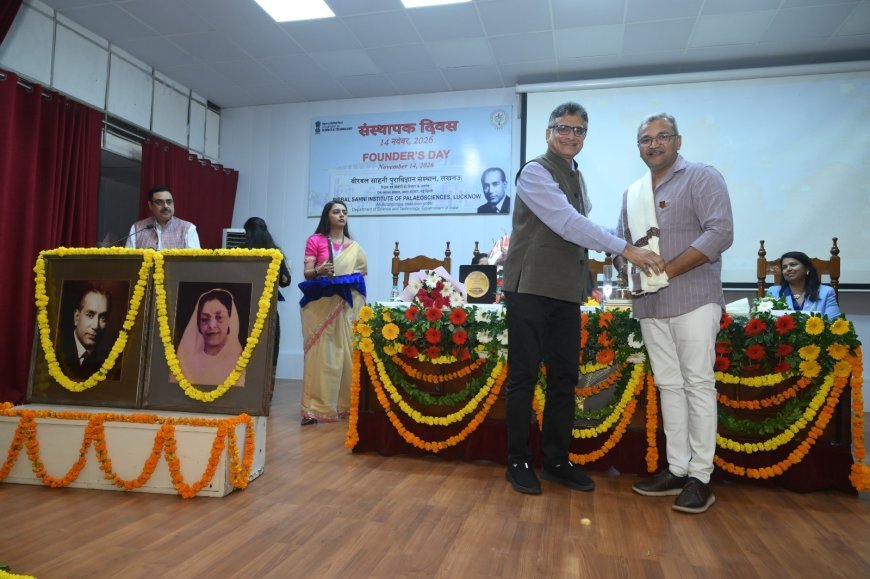
The Birbal Sahni Institute of Palaeosciences (BSIP) in Lucknow observed its annual Founder’s Day on November 14, 2026, marking the 135th birth anniversary of its visionary founder, the renowned palaeobotanist Prof. Birbal Sahni. The commemorative event brought together senior government officials, state archaeology leaders, and eminent researchers to review the institute's annual scientific progress, launch artificial intelligence initiatives in fossil studies, and outline upcoming international collaborations.
Main News
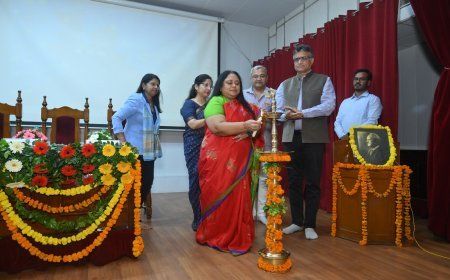
Operating as an autonomous research institution under the Department of Science and Technology (DST), Government of India, BSIP dedicated the day-long programme to reflecting on the evolution of Earth sciences in the country. Born on November 14, 1891, Prof. Birbal Sahni established palaeobotany as a foundational scientific discipline in India before his passing on April 10, 1949. The formal proceedings began at the institute campus with floral tributes offered at Prof. Sahni’s Samadhi, followed by the traditional lighting of the ceremonial lamp and Vandana.
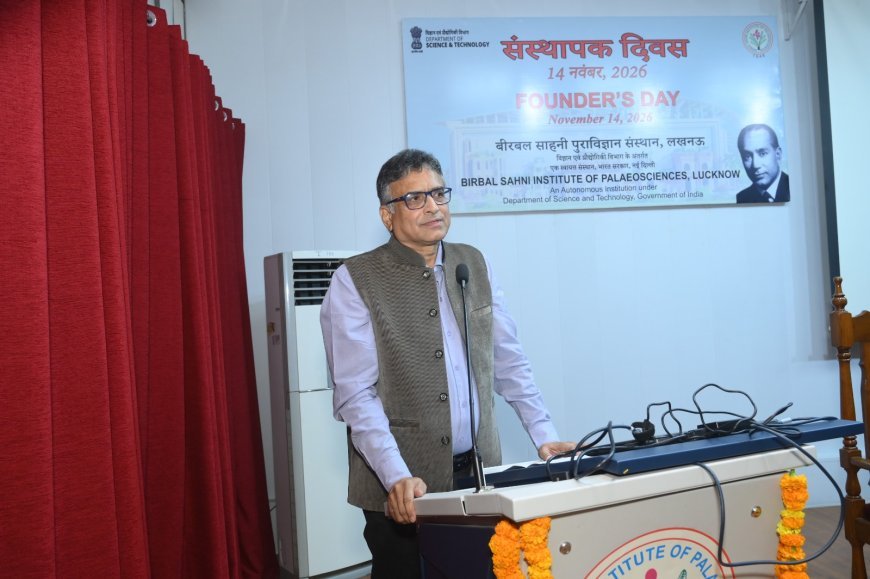
Delivering the welcome address, BSIP Director Prof. M. G. Thakkar presented a detailed report card of the institute’s academic and research milestones achieved during the 2025–26 financial year. He noted that the institute’s scientific output saw substantial expansion, with researchers publishing nearly 200 peer-reviewed research papers over the past year, many of which appeared in globally recognized, high-impact journals. Prof. Thakkar also highlighted that the institute has actively diversified its financial resources through extramural research grants while strengthening partnerships with major national and international scientific bodies.

A key technological announcement during the event was the launch of the BRAHMA AI Mission. According to the institute's leadership, this artificial intelligence framework is designed to transform traditional palaeoscientific workflows by accelerating fossil identification, streamlining digital fossil documentation, and enhancing palaeoclimatic modelling. Furthermore, Prof. Thakkar acknowledged the editorial milestone of transitioning the institute’s flagship academic publication, the Journal of Palaeosciences, onto the globally established Sage Publications platform to widen its international readership.
Official Position
The ceremony was attended by Mrs. A. Dhanalakshmi, Joint Secretary in the Department of Science and Technology, Government of India, who served as the Chief Guest, alongside Mrs. Renu Dwivedi, Director of the Uttar Pradesh State Archaeology Department, who joined as the Guest of Honour.
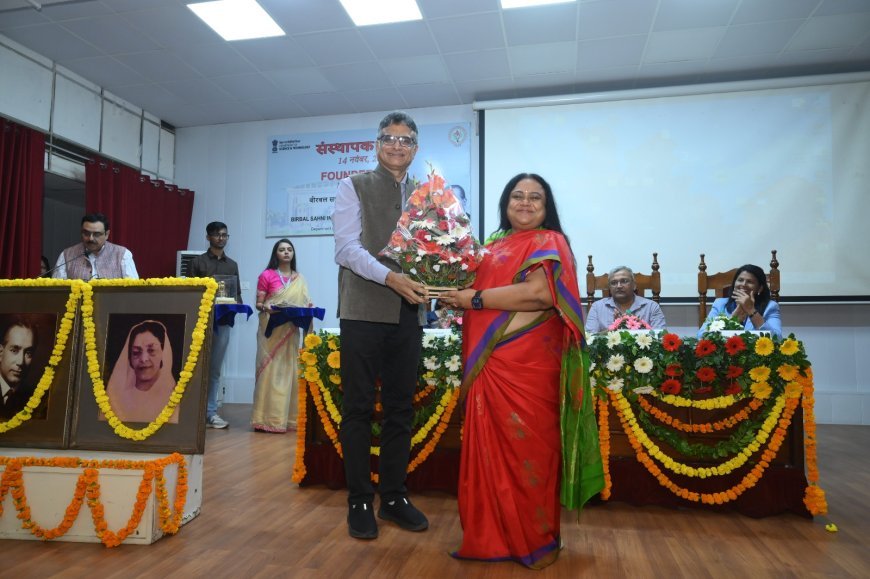
In her keynote address, Chief Guest Mrs. A. Dhanalakshmi commended BSIP for maintaining high research standards and expanding its academic footprint. She urged the scientific community to shift its strategic focus from purely intellect-driven academic curiosity toward demand-driven scientific investigations. Emphasizing practical utility, she stated that modern scientific research must deliver tangible applications and direct societal benefits, adding that palaeoscience holds immense potential to support major national Science and Technology missions.
Guest of Honour Mrs. Renu Dwivedi paid tribute to the foundational role played by Mrs. Savitri Sahni, wife of the late Prof. Birbal Sahni, in nurturing and sustaining the institute during its formative years. Looking toward future institutional synergy, Mrs. Dwivedi proposed signing a formal Memorandum of Understanding (MoU) between the Uttar Pradesh State Archaeology Department and BSIP. She explained that combining archaeological field surveys with BSIP’s specialized expertise in archaeobotany would allow researchers to reconstruct past human-environment interactions and regional cultural history with greater scientific precision.
Public Impact
The initiatives announced during Founder’s Day carry significant implications for public policy, environmental management, and sustainable industrial practices. Through the integration of artificial intelligence under the BRAHMA AI Mission and advanced palaeoclimatic modelling, scientists aim to decode historical climate shifts, offering data-backed insights that can assist policymakers in preparing for contemporary climate change challenges.

Additionally, the proposed collaboration between state archaeologists and palaeobotanists promises to enrich historical preservation across Uttar Pradesh. By scientifically analyzing ancient plant remains recovered from archaeological sites, researchers can uncover historical agricultural practices, dietary patterns, and ecological changes, making heritage conservation more informative for educators, students, and the general public.
Background
The Founder’s Day programme also served as a platform for specialized academic discourse through two prestigious memorial lectures. The 56th Birbal Sahni Memorial Lecture was delivered by Prof. Nishith A. Dharaiya, Director of the Centre of Excellence for Wildlife and Conservation Studies at Bhakta Kavi Narsinh Mehta University in Junagadh, Gujarat. Speaking on the theme of integrating science and technology for effective wildlife conservation, Prof. Dharaiya focused extensively on the ecology of the sloth bear, one of India's major bear species. He outlined evidence-based strategies to mitigate human–sloth bear conflicts, protect vital wildlife corridors, and foster sustainable coexistence between local communities and forest habitats.
The 68th Sir A.C. Seward Memorial Lecture was presented by Prof. Bineesha Payattati, Executive Director of the International Institute of Waste Management (IIWM) in Bengaluru. Addressing the audience on biomimicry-inspired circular economy and waste management, she demonstrated how biological structures in nature can solve modern environmental problems. She explained how fungal mycelium can bind agricultural waste into biodegradable protective packaging, offering an eco-friendly alternative to synthetic plastics. She also cited real-world technological innovations inspired by nature, including disposable syringes modeled after the mosquito proboscis, robotic manhole sanitation systems inspired by bandicoots, and bifocal camera lenses developed by studying the compound eyes of extinct trilobites preserved in the fossil record.
Important Facts
During the celebration, a special edition of the scientific journal Geophytology—published by the Palaeobotanical Society of India and edited by BSIP Scientist-E Dr. Anju Saxena as Chief Editor—was officially released.
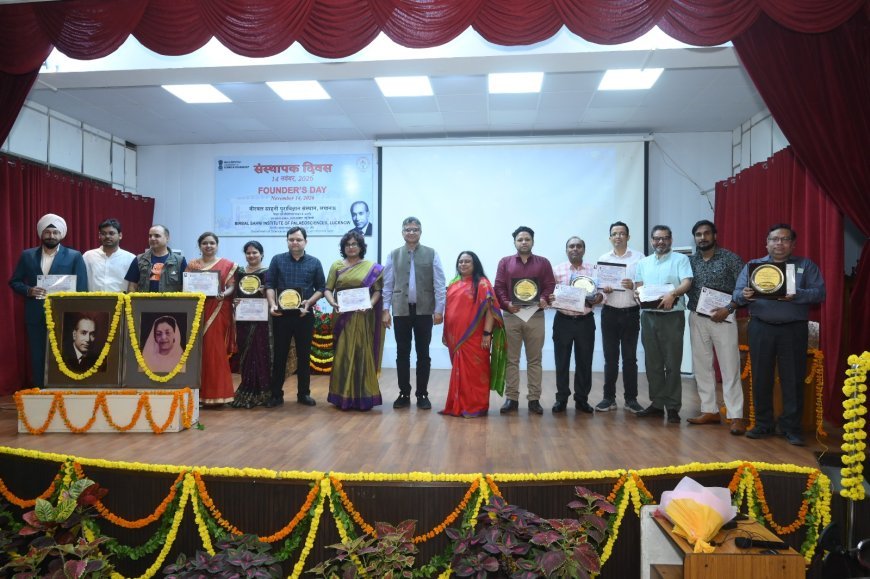
To recognize internal excellence, the institute presented the BSIP Wall of Fame Awards for the 2025–26 financial year across scientific, technical, and administrative categories: Dr. Santosh K. Shah and Dr. Parminder Singh Ranhotra jointly received the Best Paper Award, while Dr. Santosh K. Shah also secured the Highest Cited Paper Award. The Highest Number of Publications Award went to Dr. Swati Tripathi and Dr. Mohd. Firoze Quamar. For international impact, the Global Recognition Award was conferred upon Dr. K. Pauline Sabina, Dr. S. Nawaz Ali, and Dr. Santosh K. Shah, whereas Dr. Swati Tripathi and Dr. Shreya Mishra received the National Recognition Award. In the staff categories, Mr. D. K. Pal and Dr. Ishwar C. Rahi won the Best Technical Staff Award (Scientific), while Mr. Syed Rashid Ali, Mr. Sumit Bisht, and Dr. Nilay Govind were honoured with the Best Technical Staff Award (Non-Scientific). Mr. Karan Yadav and Ms. Barsha Shah received the Best Administrative Staff Award.
Separately, prizes were distributed to winners of various competitions held during Hindi Fortnight 2026. Dr. Poonam Verma, Scientist-E and Convener of the Hindi Rajbhasha Committee, announced the winners who were felicitated for promoting the official language within the institute's daily operations.
Next Process
Looking ahead, BSIP is actively coordinating with multiple central ministries and partner institutions to organize the XXII INQUA Congress 2027. Scheduled to take place from January 28 to February 3, 2027, at the Indira Gandhi Pratishthan in Lucknow, this global event marks the first time the prestigious International Union for Quaternary Research (INQUA) Congress is being hosted anywhere in the Indian subcontinent. Alongside preparations for the 2027 international summit, the institute will initiate formal discussions with the Uttar Pradesh State Archaeology Department to draft and finalize the proposed collaborative MoU.
Factual Ending
The 2026 Founder’s Day observances concluded with a formal vote of thanks, reaffirming BSIP’s institutional roadmap of combining foundational fossil research with modern artificial intelligence, ecological conservation, and interdisciplinary public service.
How Ancient Fossils and Nature Inspire Modern Waste Management Solutions
During the 68th Sir A.C. Seward Memorial Lecture, experts highlighted how biomimicry—the practice of imitating biological designs found in nature—is reshaping sustainable engineering. By studying both living organisms and extinct species preserved in ancient rock layers, researchers are developing practical tools that reduce industrial waste and improve public infrastructure.
For instance, engineers have studied the complex optical structure of extinct trilobite eyes to design advanced bifocal camera lenses, proving that palaeontological records hold direct value for modern optics. Similarly, agricultural crop residues are now being combined with fungal mycelium to grow sturdy, compostable packaging materials that naturally decompose after use, offering a circular alternative to single-use plastics.
India Set to Host Historic XXII INQUA Congress in Lucknow in Early 2027
Lucknow is preparing to become the center of global Earth science research as the Birbal Sahni Institute of Palaeosciences leads preparations for the XXII INQUA Congress 2027. Scheduled from January 28 to February 3, 2027, at the Indira Gandhi Pratishthan, the conference represents a major milestone for Indian science, as the event is being held in the Indian subcontinent for the very first time.
The international gathering will bring together quaternary scientists, climate researchers, and geologists from around the world to examine past climate shifts, sea-level changes, and human evolution. Hosting the congress in Uttar Pradesh is expected to boost international academic partnerships and showcase India's growing capabilities in climate and palaeoscience research
यह भी पढ़ें : CM Yogi Announcements for Ex-Servicemen: यूपी में वीरता पदक विजेताओं की पुरस्कार राशि होगी दोगुनी, पूर्व सैनिकों को मकान पर 50 लाख तक स्टांप शुल्क में छूट